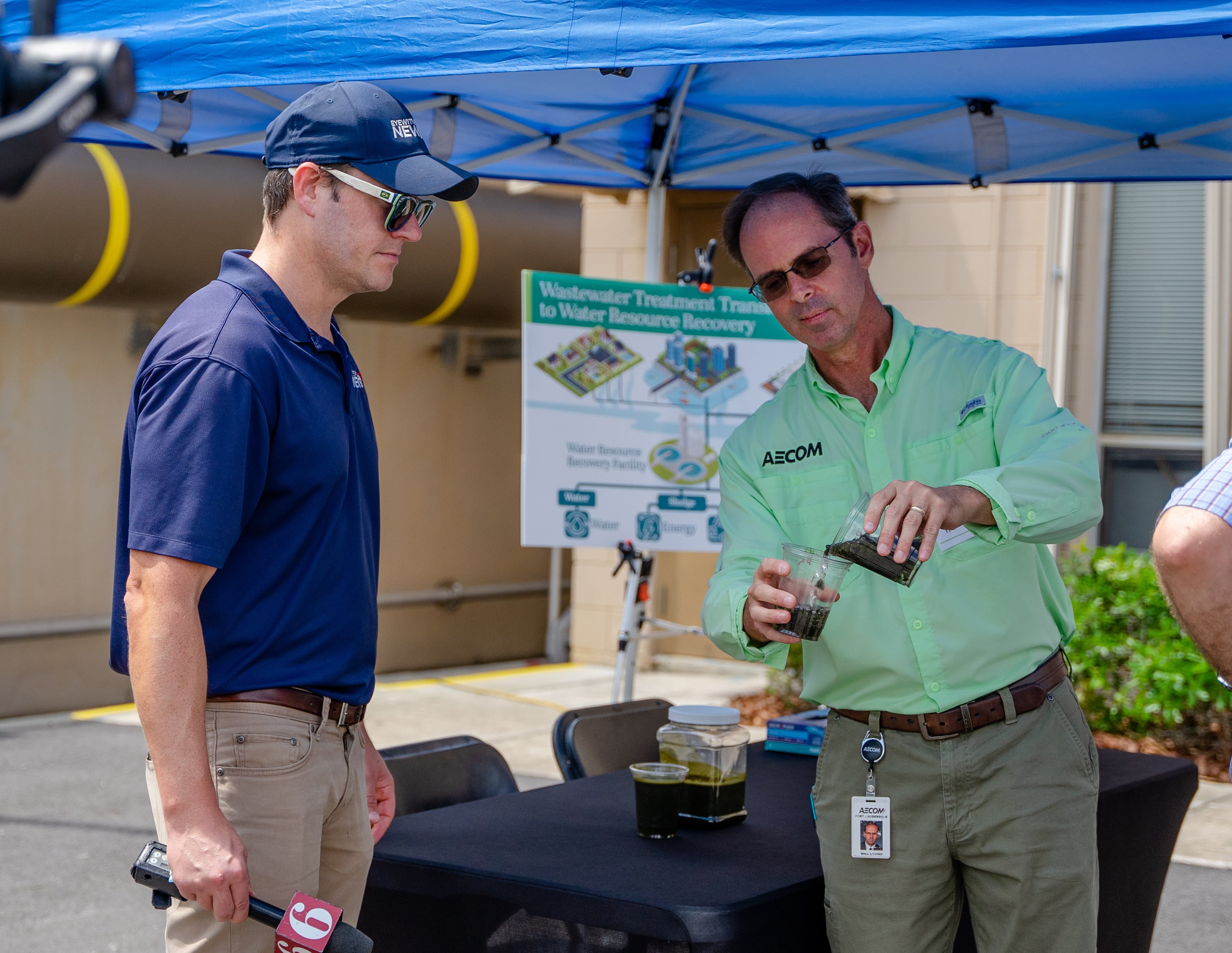
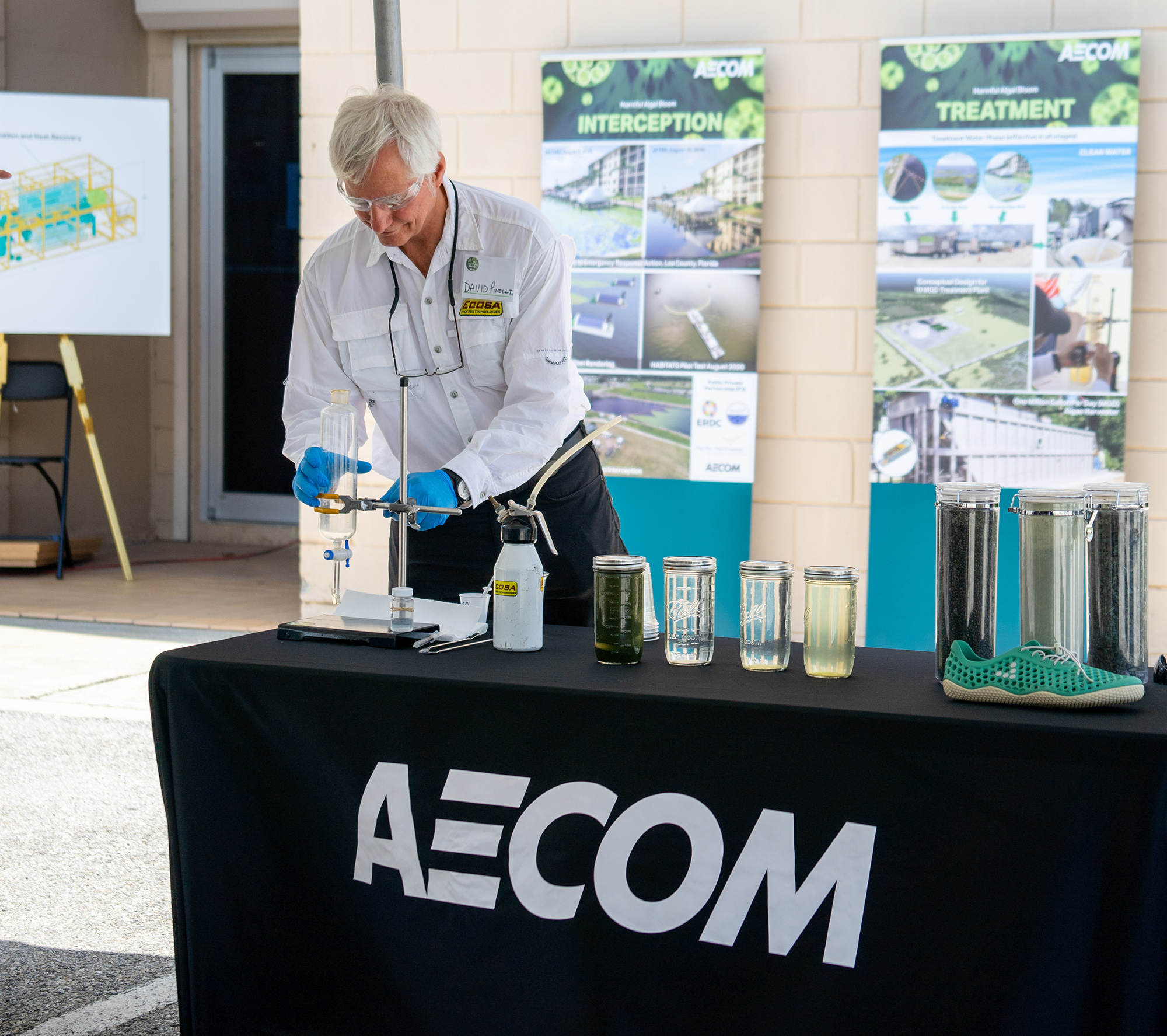
Algae and wastewater biosolids are considered good sources of biofuel because they are rich in carbon. By reimagining how we use these organic materials, we can protect Florida’s waterways from nutrient pollution and eliminate harmful algal blooms. After collecting the algae from the water, these biosolids can be converted into liquid biofuel for a renewable, clean-energy source through hydrothermal processing. Temperature, pressure and water are combined to convert the wet wastes into oil and gas, which produce the same product as fossil fuels in 30 minutes rather than 30 million years.
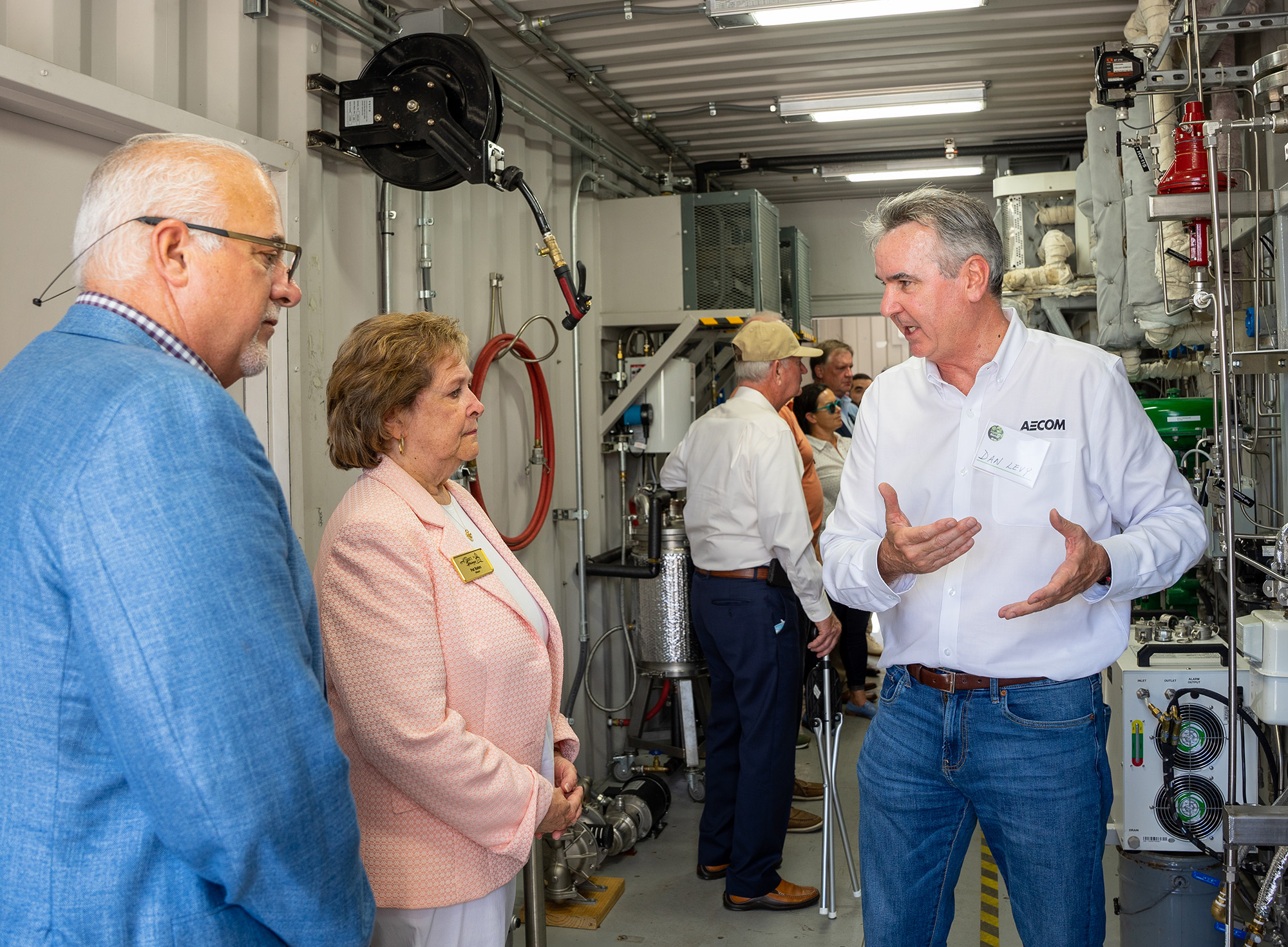
This specialized process requires only 15% of the energy produced to run, allowing 85% of the product to be used as biofuel. As a result, the process produces 4 to 6 gallons of crude oil a day. The pilot helped the City and AECOM understand its potential for large-scale expansion.
This technology is a game-changer for repurposing wastewater and biosolids. Wastewater is collected and treated at the City’s facility around the clock, producing reclaimed water for thousands to use, as well as additional biosolids, which are typically turned into soil fertilizer. These natural byproducts could be further processed into usable oil and gas. This partnership and program with AECOM are exciting milestones in a long list of groundbreaking achievements for our City as we create viable solutions for a better future.
Altamonte Springs is the first in the state of Florida and one of only three in the country to test this cutting-edge technology.
Breaking the Cycle of Pollution
COCs, also known as “forever chemicals,” include a growing number of synthetic substances such as pharmaceuticals, pesticides and per and polyfluoroalkyl substances (PFAS). These chemicals are molecularly stable and difficult for conventional wastewater treatment plants to fully remove or destroy. As such, they can be found in the plant’s biosolids (sludge) and may be introduced to the environment when biosolids are applied to agricultural lands. Due to their potential health risks and adverse ecological impacts, the removal of COCs from biosolids has become a critical technical and environmental challenge.
Hydrothermal Liquefaction (HTL) can help prevent the introduction of COCs into the environment. HTL leverages heat and pressure to expedite the conversion of carbon components in the waste stream into biocrude oil emulating the natural process that creates fossil fuels, but at a remarkable pace—minutes instead of millions of years. HTL aims to not only re-purpose biosolids into liquid biocrude but to also obliterate these COCs.
Technical literature indicates that HTL shows promise in rendering PFAS compounds harmless (Elliott 2013; Yu 2020; Wu 2020). Additionally, as an alternative biosolids disposal method, HTL aligns with the growing emphasis on reducing carbon emissions and achieving beneficial reuse for a positive impact on wastewater sludge.
Read More:
AECOM: From Pollution to Power